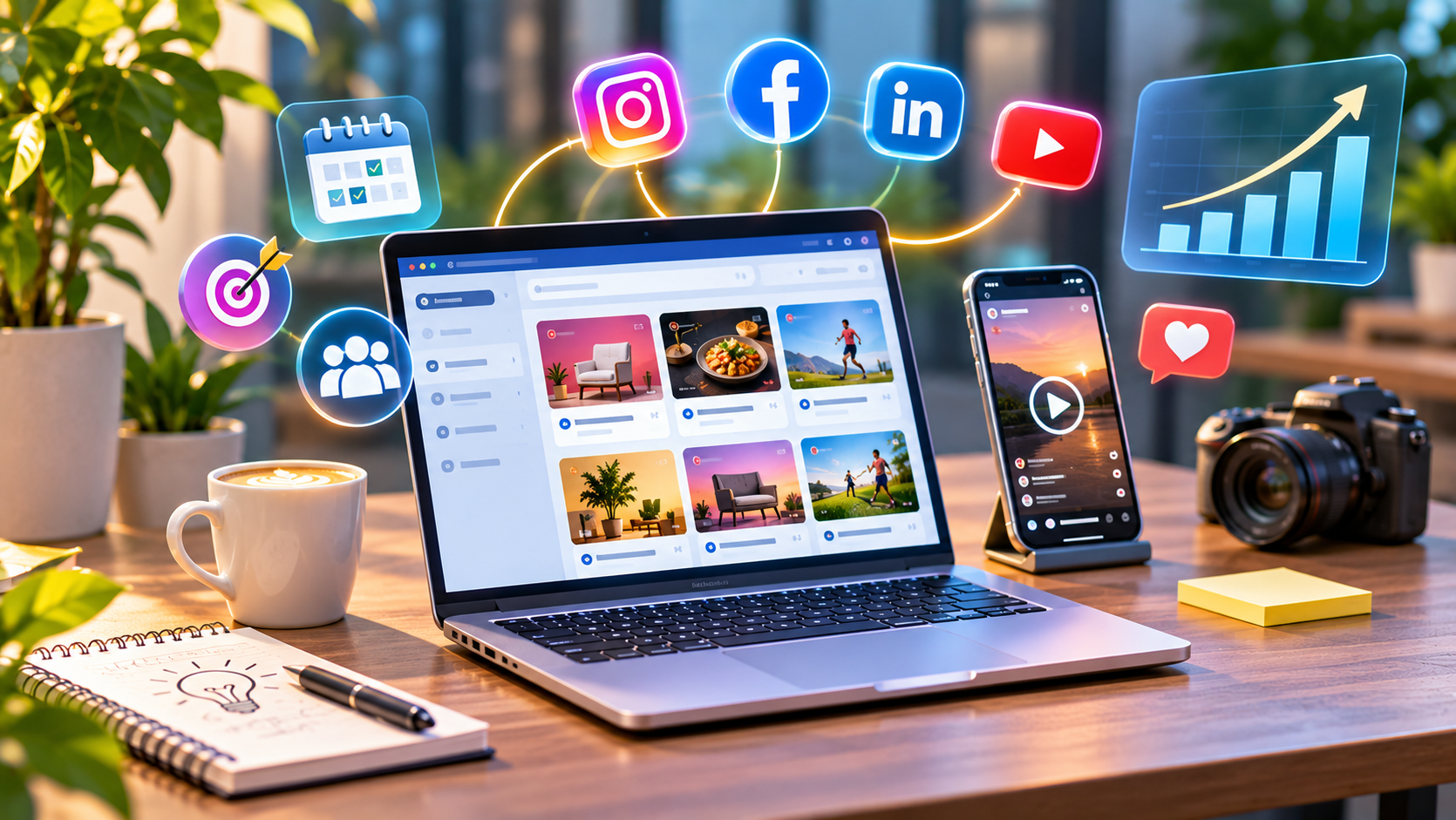
Why Does Your Business Need Professional Social Media Management in 2026?
Introduction
Social media has changed the way businesses communicate with their customers. People now use platforms such as Instagram, Facebook, LinkedIn, and YouTube not only for entertainment but also to discover brands, explore products, compare services, and make purchasing decisions.
For businesses, this creates an opportunity to reach potential customers where they already spend time online.
However, simply creating a social media account and occasionally publishing posts is not enough to build a strong digital presence. Businesses need a clear strategy, consistent content, professional creatives, meaningful communication, and regular performance monitoring.
This is where professional social media management becomes valuable.
Social media management involves planning, creating, publishing, monitoring, and improving content across relevant social platforms. It helps businesses maintain a consistent brand identity while building stronger relationships with their audiences.
In 2026, social media management is not just about posting attractive images. It is about creating content that communicates business value, encourages engagement, builds trust, and supports measurable marketing objectives.
Let's understand why businesses need professional social media management and how it can support their digital marketing growth.
1. What Is Social Media Management?
Social media management is the process of managing a business's presence across social networking platforms through planned content and audience communication.
It involves more than uploading photographs or promotional posters. A professional approach includes understanding the target audience, selecting suitable platforms, developing a content strategy, designing creatives, scheduling posts, responding to interactions, and analysing performance.
Typical social media management activities include:
- Social media account management.
- Content strategy and planning.
- Creative poster and graphic design.
- Short-form video and reel creation.
- Caption and hashtag research.
- Content calendar preparation.
- Post scheduling and publishing.
- Community engagement.
- Campaign coordination.
- Performance tracking and reporting.
For example, a restaurant may use Instagram to showcase food photography and reels, Facebook to share offers and updates, and Google Business Profile to help customers discover its location and services.
Each platform serves a different purpose. A planned strategy helps maintain consistency while adapting content to the audience and platform.
2. How Does Social Media Management Build Brand Awareness?
Brand awareness refers to how familiar people are with a business, its products, and its services.
When customers repeatedly encounter useful and recognizable content from a business, they have more opportunities to remember its brand.
Social media helps businesses introduce themselves to audiences through different content formats.
For example:
- Brand introduction posts explain what the business does.
- Product showcases highlight products and services.
- Educational posts answer common customer questions.
- Behind-the-scenes videos show how the business operates.
- Customer stories communicate real experiences when permission is available.
- Festival and seasonal creatives help maintain timely communication.
A consistent visual identity also makes a business easier to recognize. Using suitable brand colours, typography, photography, and design elements helps maintain a professional appearance.
The objective is to create a recognizable brand presence rather than publish unrelated promotional content.
3. Why Is a Social Media Content Strategy Important?
Publishing content without a strategy can result in inconsistent messaging, repeated topics, and missed opportunities.
A social media content strategy provides direction. It helps businesses understand what to publish, why they are publishing it, and which audience they want to reach.
A good strategy begins with three important questions:
Who is your target audience?
Identify the people most likely to be interested in your products or services. Consider their interests, location, needs, age group where relevant, and online behaviour.
What do you want to communicate?
Decide whether your content should educate customers, introduce services, demonstrate products, build trust, or encourage enquiries.
Which platforms should you use?
Select platforms based on your audience and business objectives rather than attempting to maintain every available social media account.
A balanced content strategy can include:
- Educational content.
- Promotional content.
- Brand awareness posts.
- Product and service showcases.
- Customer-focused content.
- Short-form videos.
- Industry updates.
- Frequently asked questions.
The right content mix depends on the business and should be adjusted based on audience response.
4. How Can Short-Form Videos Improve Social Media Engagement?
Short-form videos have become an important content format across social media platforms.
Instagram Reels, YouTube Shorts, and other short-video formats allow businesses to communicate information in a visual and engaging way.
Instead of relying entirely on static promotional posters, businesses can use videos to demonstrate products, explain services, introduce team members, and share useful information.
Some practical short-form video ideas include:
Product Demonstrations: Show how a product works and highlight its useful features.
Service Explanations: Explain what a business offers and how customers can benefit.
Behind-the-Scenes Content: Give audiences a look at the preparation, production, or working process.
Educational Videos: Share simple tips and answers to common questions in the industry.
Business Introductions: Present the business, its team, and its approach to serving customers.
Customer Experiences: Share authentic customer feedback or testimonials with appropriate permission.
Businesses should focus on clear storytelling, good visual quality, suitable pacing, and a relevant message.
Videos do not need to be complicated to be useful. A well-planned short video that answers a customer question can be more meaningful than a visually impressive video without a clear purpose.
5. How Does Consistent Posting Help Businesses Build Customer Trust?
Consistency is an important part of maintaining an active online presence.
When a business publishes relevant content regularly, customers have more opportunities to discover its services and understand its brand.
An inactive social media profile may create uncertainty for potential customers. They may wonder whether the business is still operating or whether its information is current.
A consistent posting schedule can help businesses:
- Maintain an active brand presence.
- Communicate product and service updates.
- Share useful industry information.
- Build familiarity with their audience.
- Encourage regular customer interactions.
- Maintain consistent brand messaging.
However, consistency does not mean publishing content every day without considering quality.
A realistic content calendar with useful posts and videos is generally more effective than publishing large amounts of repetitive or irrelevant material.
6. Which Social Media Platforms Should Your Business Use in 2026?
Every social media platform has different audiences, content formats, and communication opportunities.
Businesses should select platforms based on their target customers and marketing objectives.
<PRIVATE_PERSON> is a useful platform for visually communicating products, services, and brand identity. Businesses can use posts, Stories, Reels, and other formats to showcase their offerings and engage with audiences.
Suitable for:
- Restaurants and cafes.
- Fashion and lifestyle brands.
- Retail stores.
- Beauty and wellness businesses.
- Creative businesses.
Facebook provides businesses with opportunities to maintain a business presence, publish updates, share videos, communicate with communities, and run advertising campaigns.
Suitable for:
- Local businesses.
- Retail and service providers.
- Restaurants.
- Educational institutions.
- Community-focused businesses.
LinkedIn is particularly useful for professional communication, B2B marketing, employer branding, and industry-focused content.
Suitable for:
- IT companies.
- Consulting firms.
- Software development companies.
- Corporate service providers.
- Professional institutions.
YouTube
YouTube supports longer educational videos, product demonstrations, tutorials, interviews, and Shorts.
Suitable for:
- Educational businesses.
- Technology companies.
- Product-based brands.
- Training institutions.
- Businesses that benefit from detailed video explanations.
Businesses do not need to use every platform. Selecting the most relevant channels and managing them effectively is often a better starting point.
7. How Can Social Media Management Generate Business Enquiries?
Social media can support lead generation by helping potential customers discover a business, understand its services, and take the next step.
However, generating enquiries requires more than increasing followers or likes.
Businesses should create content that connects customer needs with relevant solutions.
For example, a website development company can publish:
- Website design examples.
- E-commerce development information.
- Website maintenance tips.
- Explanations of custom software solutions.
- Project showcases with client approval.
- Clear invitations to request a consultation.
A restaurant can publish menu highlights, food videos, location information, and reservation details.
A coaching institute can share course information, classroom activities, educational tips, and admission updates.
Useful calls to action can encourage customers to:
- Visit the business website.
- Send a WhatsApp enquiry.
- Call the business.
- Request a quotation.
- Register for a service.
- Book an appointment.
Businesses should make these next steps easy to understand and ensure enquiries receive timely responses.
Social media can create opportunities for leads, but the actual number and quality of enquiries depend on factors such as audience relevance, content, offers, competition, and follow-up.
8. Why Should Businesses Use a Social Media Content Calendar?
A content calendar is a planning document that organizes social media posts and videos over a specific period.
It helps businesses avoid last-minute content creation and maintain a consistent publishing schedule.
A monthly content calendar may include:
DayContent TypeExampleMondayEducational postIndustry tipsTuesdayProduct showcaseFeatured productWednesdayShort videoService explanationThursdayEngagement postCustomer questionFridayPromotional postService highlightSaturdayBrand contentBehind-the-scenesSundayCommunity contentWeekly highlights
This is only an example. The actual schedule should depend on the business's resources and audience response.
A useful content calendar should include:
- Publishing date.
- Social media platform.
- Content format.
- Topic or campaign.
- Caption.
- Creative requirements.
- Call to action.
- Publishing status.
Planning content in advance helps businesses coordinate designs, captions, videos, approvals, and publishing activities.
It also makes it easier to identify gaps and maintain a balanced content strategy.
9. How Does Professional Graphic Design Improve Social Media Branding?
Visual communication plays a major role in social media marketing.
A poorly designed creative with unclear information can make it difficult for customers to understand the message. Professional design helps businesses present their products and services in a more organized and recognizable way.
Important design considerations include:
Brand Consistency: Use suitable brand colours, fonts, and visual elements across posts.
Clear Communication: Present one main message in a creative rather than overcrowding it with information.
Visual Quality: Use relevant photography, illustrations, and graphics that support the content.
Platform Compatibility: Prepare creatives in suitable dimensions for posts, Stories, Reels, and other formats.
Readable Layout: Maintain proper spacing, contrast, and hierarchy.
Businesses can use different creative formats, including promotional posters, informational graphics, carousel posts, product creatives, festival designs, and service announcements.
Professional design is not just about making a post look attractive. It should help the audience understand the message and recognize the business.
10. How Can Businesses Measure Social Media Marketing Performance?
Social media performance should be measured using metrics that connect to business objectives.
A high follower count does not automatically indicate successful marketing. Businesses need to understand whether their content is reaching the right people and encouraging meaningful actions.
Important metrics include:
Reach: The number of unique accounts that have seen content.
Impressions: The total number of times content has been displayed.
Engagement: Interactions such as likes, comments, shares, and saves.
Video Performance: Measures such as views, watch time, and audience retention where available.
Profile Visits: Shows how many people visit the business profile.
Website Clicks: Helps understand whether social content is encouraging visitors to explore the website.
Enquiries and Conversions: Tracks actions such as calls, WhatsApp messages, form submissions, and purchases.
Businesses can use platform-specific analytics tools to monitor these metrics.
Regular reporting helps identify which content formats perform well, which topics interest customers, and where improvements are required.
11. What Are the Common Social Media Marketing Mistakes Businesses Should Avoid?
Even businesses that publish content regularly can struggle if their social media activities lack direction.
Some common mistakes include:
Posting Without a Strategy: Publishing random content without understanding the target audience can reduce relevance.
Focusing Only on Followers: Follower growth is not the only measure of success. Relevant enquiries and meaningful engagement also matter.
Using the Same Content Everywhere: Each platform has different formats and audience expectations. Content should be adapted appropriately.
Ignoring Customer Comments and Messages: Delayed or missing responses can create a poor customer experience.
Overloading Promotional Content: Constantly advertising products and services without providing useful information can reduce audience interest.
Inconsistent Branding: Frequently changing visual styles can make a business harder to recognize.
Ignoring Performance Data: Without reviewing analytics, businesses may continue publishing content that does not support their objectives.
Expecting Instant Results: Building a recognizable brand and a meaningful social media audience requires time, consistency, and continuous improvement.
Avoiding these mistakes helps businesses build a more organized and customer-focused social media presence.
12. Why Should Businesses Choose Professional Social Media Management Services?
Managing multiple social media accounts requires planning, creative development, copywriting, publishing, communication, and performance analysis.
For business owners who are already managing daily operations, handling all these activities internally can become challenging.
Professional social media management services help businesses organize these activities through a structured process.
Depending on the business requirements, professional support may include:
- Social media strategy development.
- Monthly content calendar planning.
- Creative poster and graphic design.
- Reels and short-form video content.
- Caption and hashtag preparation.
- Social media account management.
- Content scheduling and publishing.
- Audience engagement support.
- Performance monitoring and reporting.
The scope of work should be clearly defined based on the business's goals, platforms, content requirements, and available resources.
Professional management can also help maintain consistency and free business owners to focus on their core operations.
13. How Can OBSquare Support Your Social Media Marketing?
Building a strong social media presence requires the right combination of strategy, creative content, consistent communication, and performance monitoring.
OBSquare offers digital marketing solutions designed to help businesses strengthen their online presence and communicate more effectively with potential customers.
Depending on your requirements, OBSquare's digital marketing services include:
- Social media management.
- Creative poster and graphic design.
- Short-form video and AI video content.
- Content creation and planning.
- Search Engine Optimization (SEO).
- Google Business Profile management.
- Google Ads and Meta Ads.
- Digital branding and marketing strategy.
Whether you operate a restaurant, retail store, educational institution, startup, or professional service company, a suitable digital marketing approach can help you present your business more effectively online.
Explore OBSquare's digital marketing services to identify the right solutions for your business objectives.
Conclusion
Social media management has become an important part of modern business marketing. It helps businesses build brand awareness, communicate with customers, showcase products and services, and create opportunities for enquiries.
However, effective social media marketing requires more than frequent posting. Businesses need a clear strategy, consistent visual identity, relevant content, audience engagement, and regular performance analysis.
In 2026, businesses that focus on useful content and meaningful customer communication can build a stronger foundation for their online presence.
By choosing the right platforms and following a structured content strategy, businesses can make social media a valuable part of their overall digital marketing activities.
Ready to strengthen your business's social media presence? Connect with OBSquare and explore professional digital marketing solutions that align with your business goals.