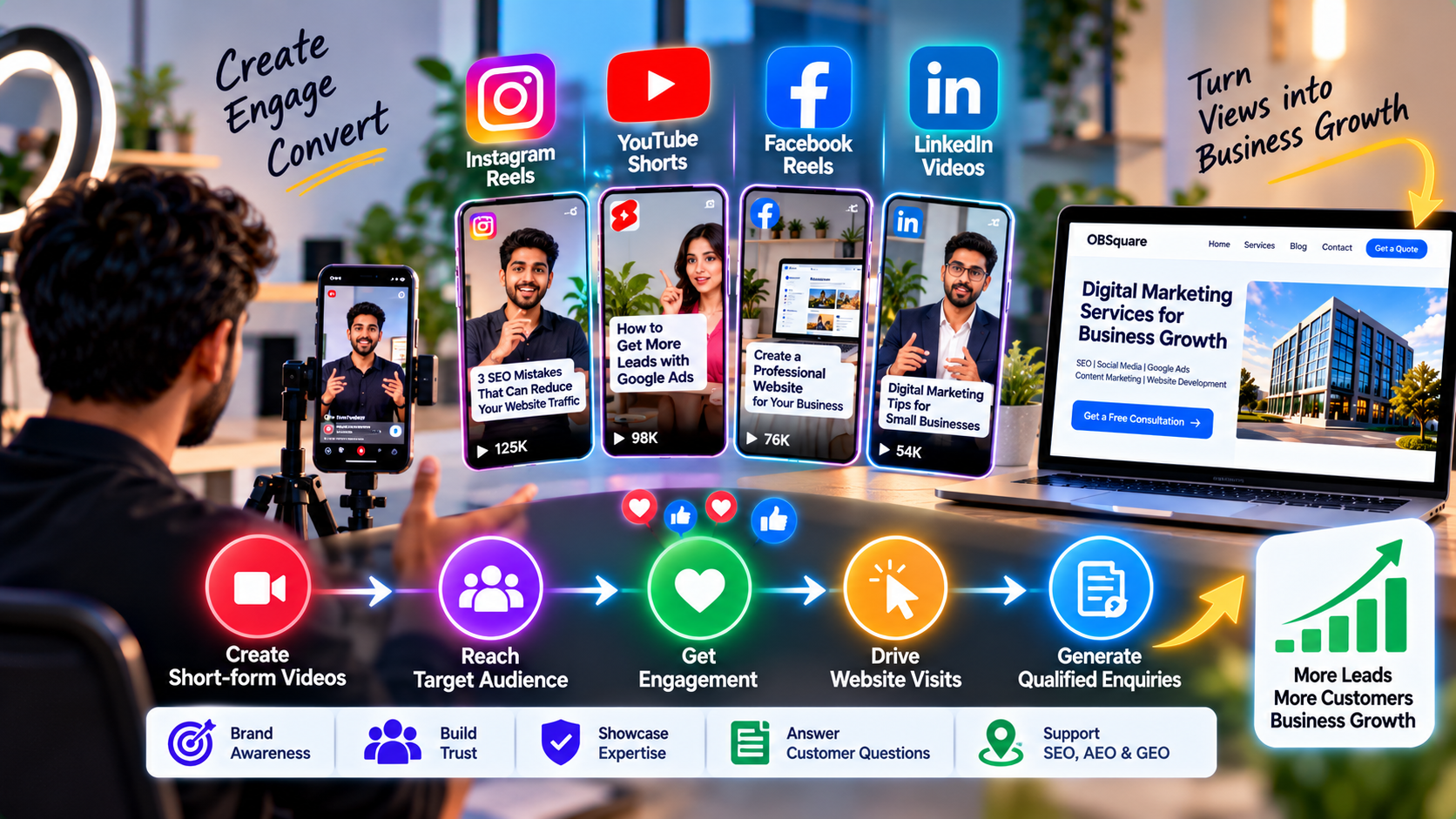
How Can Businesses Use Short-Form Video Marketing to Generate Qualified Leads?
Introduction: Why Short-Form Video Marketing Matters
People often prefer content that communicates useful information quickly. Short-form videos make it easier for businesses to demonstrate products, explain services, answer customer questions, and share practical tips in a format that fits modern viewing habits.
Platforms such as Instagram, YouTube, and Facebook give businesses opportunities to reach audiences through short, engaging videos. However, generating views is not the same as generating qualified leads.
A successful video marketing strategy connects attention with a clear business objective. It helps the right audience understand what a business offers, why the service may be relevant to them, and what they should do next.
By combining short-form videos with useful website content, social media marketing, SEO, AEO, and GEO, businesses can build a more coordinated digital marketing strategy.
1. Understand How Short-Form Videos Generate Leads
Short-form video marketing uses brief videos to communicate a message, demonstrate value, and encourage a relevant action.
Businesses can use these videos at different stages of the customer journey.
- Awareness: Introduce the business, product, or service.
- Consideration: Explain benefits, answer questions, and demonstrate expertise.
- Conversion: Encourage interested viewers to enquire, book a consultation, or visit a relevant service page.
- Retention: Share tips, product guidance, and helpful information with existing customers.
For example, a digital marketing agency could publish a short video explaining three common website SEO mistakes. Viewers who recognize these problems may visit the agency's website to learn more about its SEO services.
The video creates an entry point, while the website and enquiry process help turn relevant interest into a potential business opportunity.
2. Choose the Right Short-Form Video Platforms
Not every platform serves the same audience or business objective. Businesses should select platforms based on their customers, content format, and available resources.
Instagram Reels
Reels can help businesses showcase products, share quick educational tips, demonstrate services, and introduce their brand to potential customers.
YouTube Shorts
Shorts can help businesses share concise explanations, practical tutorials, product demonstrations, and answers to common questions. They can also complement longer YouTube videos and related website resources.
Facebook Reels
Facebook Reels may help businesses reach relevant communities and audiences, particularly when their customers actively use Facebook.
LinkedIn video
For business-to-business companies, short videos on LinkedIn can communicate professional insights, explain solutions, and demonstrate expertise to relevant professional audiences.
Businesses do not need to publish everywhere immediately. Starting with one or two suitable platforms can make it easier to maintain quality and measure performance.
3. Create Videos That Answer Real Customer Questions
Effective lead-generation videos begin with understanding the questions, problems, and concerns of the intended audience.
Instead of creating videos only to follow trends, businesses should develop content that helps potential customers make informed decisions.
Useful video topics include:
- Common mistakes customers make when choosing a service.
- Simple solutions to recurring problems.
- Product features and demonstrations.
- Frequently asked questions.
- Behind-the-scenes processes.
- Customer success stories supported by genuine evidence.
- Comparisons that help customers understand available options.
- Explanations of pricing factors and service processes.
For example, a website development company could create a short video explaining the difference between a static website and a dynamic website. The video can help viewers understand which option may suit their requirements and direct them to a detailed service page.
This approach attracts viewers based on relevant needs rather than views alone.
4. Use a Strong Hook to Capture Attention
The opening moments of a short-form video should communicate why the viewer might want to continue watching.
A hook can be a direct question, a common problem, a surprising but accurate observation, or a quick demonstration.
Examples include:
- “Is your website getting visitors but no enquiries?”
- “Three SEO mistakes that can affect your website visibility.”
- “Before running Google Ads, check these landing-page basics.”
- “Want to improve your business's online presence?”
- “Here is how to make your Google Business Profile more useful to customers.”
The opening should be relevant to the content that follows. Avoid exaggerated promises, misleading claims, and clickbait that attracts the wrong audience.
A clear hook helps the intended viewer recognize that the video addresses a problem they care about.
5. Follow a Simple Video Structure
A repeatable structure helps businesses produce videos efficiently while keeping the message clear.
A practical short-form video can follow four steps:
Step 1: Hook
Introduce the problem or question.
Step 2: Value
Share one useful tip, demonstration, or explanation.
Step 3: Context
Explain why the information matters to the viewer or business.
Step 4: Call to action
Tell interested viewers what they can do next.
For example, a video about website SEO might begin with a question about low organic traffic, explain one technical or content-related issue, demonstrate a practical improvement, and invite viewers to explore a related service page.
The ideal length depends on the topic and platform. Keep the video as concise as possible while delivering the intended value.
6. Optimize Videos for Discovery
Video discovery depends on factors that vary by platform, audience, and content type. Businesses can improve clarity and accessibility by making their videos easy to understand and relevant to their intended audience.
Recommended practices include:
- Use a descriptive caption that explains the video.
- Include relevant keywords naturally where appropriate.
- Choose an accurate, engaging cover image.
- Add readable on-screen text when it improves understanding.
- Include captions or subtitles for accessibility.
- Use relevant hashtags selectively rather than filling captions with unrelated tags.
- Keep important information easy to understand without relying entirely on audio.
- Maintain a consistent brand identity across videos.
Businesses should also optimize their profiles with clear descriptions, contact details, and links to relevant pages.
These practices can support discovery, but they do not guarantee that a video will rank, go viral, or reach a particular number of people.
7. Connect Short-Form Videos With SEO, AEO, and GEO
Short-form video marketing can complement a wider search strategy when the content addresses real customer needs and connects to useful resources.
SEO: Search Engine Optimization
Create supporting website pages or blog articles that explain the topic covered in the video. Link viewers to the most relevant resource rather than directing every viewer to the homepage.
AEO: Answer Engine Optimization
Use videos to address specific questions and publish clear written answers on the website. For example, a video explaining local SEO can lead to an FAQ or detailed guide that answers related questions.
GEO: Generative Engine Optimization
Publish accurate, well-structured information about the business, its services, and its areas of expertise. Videos can be part of this broader content strategy, while clear website information helps customers and search systems understand the business.
Social media engagement should not be assumed to directly improve Google rankings, and publishing videos does not guarantee inclusion in AI-generated answers. The benefit comes from providing useful, consistent information across relevant channels.
8. Turn Video Viewers Into Qualified Leads
A video should give interested viewers a logical next step. Without a clear path, even a well-performing video may generate attention without meaningful enquiries.
Businesses can improve their lead-generation process through the following methods:
Use relevant calls to action
Invite viewers to request a consultation, explore a service, download a useful resource, or submit an enquiry when appropriate.
Direct viewers to specific landing pages
A video about SEO services should link to an SEO-related page rather than a generic homepage whenever possible.
Make contact easy
Provide a clear website link, enquiry form, booking option, or business contact method.
Offer useful resources
A checklist, guide, product specification, or service comparison can help interested viewers take the next step.
Respond to enquiries promptly
Create a process for handling messages, calls, and form submissions so that potential customers receive useful follow-up.
Businesses should also qualify leads based on factors such as service requirements, budget, location, and purchase readiness where relevant. This helps distinguish genuine opportunities from general interest.
9. Measure Video Marketing Performance Beyond Views
Views and likes can indicate audience activity, but they do not necessarily demonstrate business impact.
Businesses should track metrics that relate to their objectives.
- Reach and views: Understand how many people are seeing the content.
- Watch time and retention: Identify whether viewers continue watching.
- Engagement: Measure relevant comments, shares, saves, and other interactions.
- Profile visits: Understand whether the video encourages further brand exploration.
- Website visits: Track traffic from video platforms where reporting is available.
- Enquiries: Measure calls, form submissions, and direct messages.
- Qualified leads: Assess how many enquiries match the business's target customers.
- Conversions: Track how many leads become paying customers.
Use suitable analytics tools, campaign tracking links, and website conversion tracking to understand the customer journey.
Review performance over time and compare videos with similar objectives. A video with fewer views may still be more valuable if it attracts the right audience and generates relevant enquiries.
10. Common Short-Form Video Marketing Mistakes
Businesses may struggle to generate leads when their video strategy focuses only on publishing frequently or chasing trends.
Common mistakes include:
- Creating content without identifying a target audience.
- Prioritizing viral views over relevant customer interest.
- Using unclear or missing calls to action.
- Directing every viewer to an unrelated landing page.
- Publishing inaccurate claims or exaggerated promises.
- Using poor audio or hard-to-read text.
- Ignoring comments and potential customer questions.
- Failing to track website visits and enquiries.
- Reposting content without considering platform requirements.
- Giving up before enough performance data is available.
A consistent, useful, and measurable approach is generally more sustainable than relying on occasional viral videos.
11. How OBSquare Can Help Businesses Use Video Marketing
OBSquare, a product of Seyfert Infotech, supports businesses through digital marketing services including social media management, content creation, posters and videos, SEO, AEO, GEO, blog writing, Google Business Profile management, and website development.
These services can work together to create a coordinated content and lead-generation strategy.
For example, a business can use short videos to introduce its services, social media management to distribute relevant content, SEO-focused website pages to provide more detailed information, and clear enquiry forms to capture interested prospects.
Performance tracking can then help identify which topics attract the most relevant audiences and which calls to action lead to meaningful enquiries.
The objective is not simply to publish more videos. It is to create content that communicates value, reaches suitable customers, and supports measurable business goals.
Conclusion
Short-form video marketing gives businesses a practical way to explain their services, answer customer questions, demonstrate expertise, and reach potential customers across digital platforms.
To generate qualified leads, businesses need more than attractive videos. They need relevant topics, clear messaging, suitable platform selection, useful calls to action, optimized landing pages, and reliable conversion tracking.
By integrating short-form videos with SEO, AEO, GEO, social media marketing, and website content, businesses can build a more connected digital marketing strategy.
Start with your customers' most common questions, create concise and useful videos, and give interested viewers a clear next step. Over time, performance data can help refine the strategy and focus resources on the content that contributes to meaningful business outcomes.
Ready to strengthen your digital presence? Explore OBSquare's content creation, social media management, SEO, AEO, GEO, and website development services to build a video marketing strategy aligned with your business goals.