How Email Marketing Helps Businesses Build Long-Term Customer Relationships
In the fast-changing digital world, businesses are constantly looking for better ways to attract customers and keep them engaged. Social media, search engines, online advertising, and content marketing can help businesses reach new audiences, but building long-term customer relationships requires consistent communication.
This is where email marketing becomes valuable.
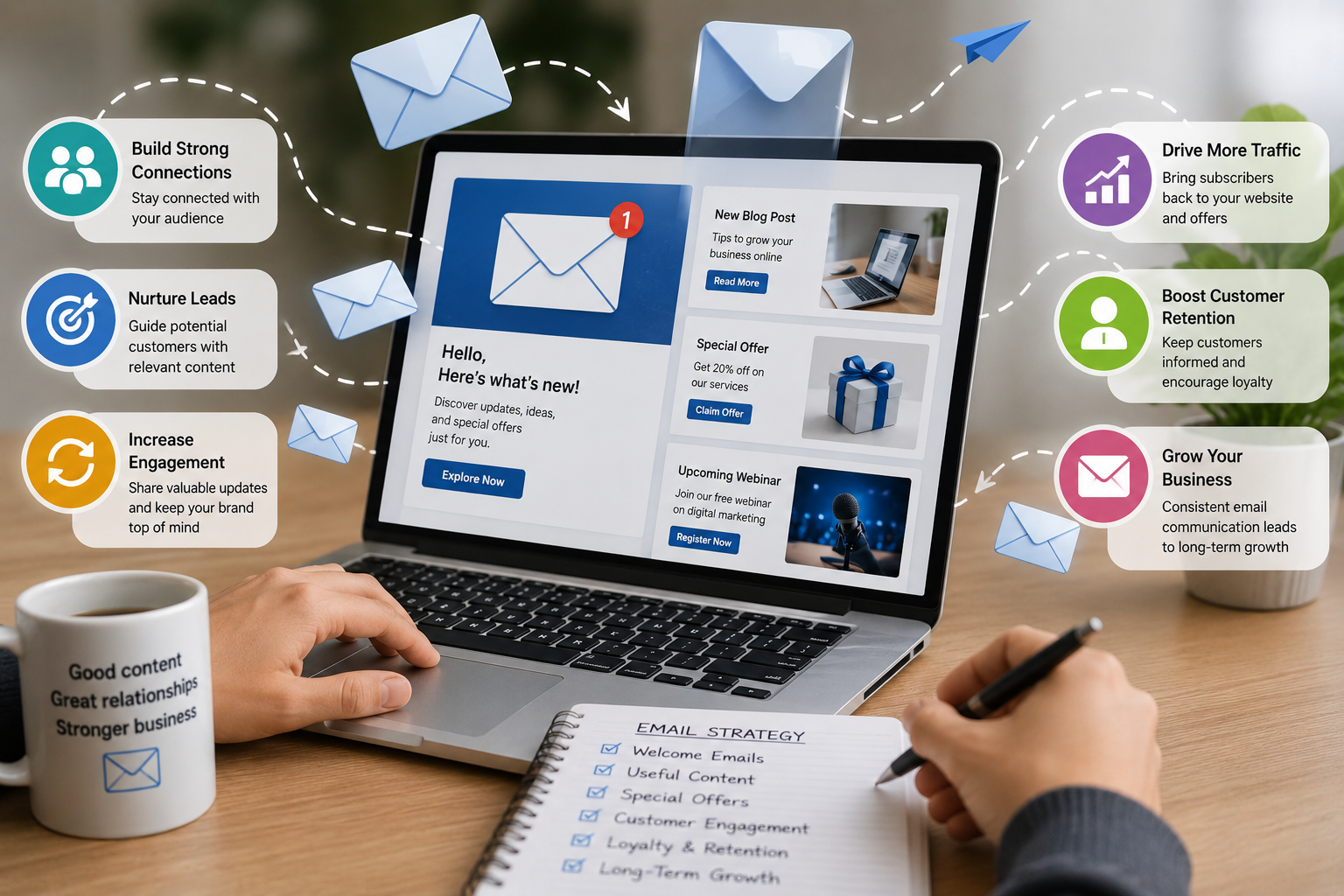
Email marketing allows businesses to communicate directly with people who have shown interest in their products or services. Through newsletters, useful content, promotions, product updates, and personalized messages, businesses can stay connected with customers and gradually build stronger relationships.
When planned properly, email marketing can support customer engagement, lead nurturing, brand awareness, customer retention, and business growth.
What Is Email Marketing?
Email marketing is a digital marketing strategy where businesses communicate with customers or opted-in subscribers through email.
Businesses can use email campaigns to share:
- Company updates
- Product launches
- Service information
- Special offers
- Newsletters
- Educational content
- Event invitations
- Customer updates
- Helpful tips
- Promotional campaigns
The purpose is not simply to send promotional emails. Effective email marketing provides relevant information that customers find useful.
Why Email Marketing Matters for Businesses
Businesses spend a lot of effort attracting new customers, but maintaining relationships with existing customers is equally important.
Email provides a direct communication channel that allows businesses to remain connected with their audience.
A strong email marketing strategy can help businesses:
- Build customer relationships
- Increase brand awareness
- Generate website traffic
- Promote products and services
- Nurture potential customers
- Encourage repeat purchases
- Share useful information
- Improve customer retention
Unlike social media, where businesses depend heavily on platform algorithms, email allows brands to communicate directly with their opted-in audience.
How Email Marketing Builds Customer Relationships
Building a strong relationship with customers takes time.
Businesses need to provide value consistently rather than contacting customers only when they want to sell something.
For example, a business can send a combination of:
Educational Content
Useful information related to the customer's interests.
Company Updates
News about new services, products, or business developments.
Helpful Tips
Practical advice that customers can use.
Exclusive Offers
Special promotions for subscribers.
Personalized Recommendations
Relevant products or services based on customer interests and interactions.
This approach can make customers feel that they are receiving useful communication rather than constant advertising.
Email Marketing for Lead Nurturing
Not every potential customer is ready to make a purchase immediately.
Someone may visit your website, enquire about a service, or download information but need more time before making a decision.
Email marketing can help nurture these leads.
A simple lead-nurturing journey could include:
First Email
Thank the customer for showing interest and provide useful information.
Second Email
Explain the product or service in more detail.
Third Email
Share helpful tips, examples, or customer experiences.
Fourth Email
Provide a relevant offer or encourage the customer to take the next step.
This allows businesses to stay connected without relying on a single interaction.
Personalized Email Marketing
Customers are more likely to engage with content that is relevant to them.
Instead of sending exactly the same message to every subscriber, businesses can organize audiences based on factors such as:
- Customer interests
- Previous interactions
- Products purchased
- Services requested
- Location
- Customer type
- Website activity
This allows businesses to create more relevant communication.
For example, a customer interested in digital marketing services may receive information about SEO, social media marketing, content marketing, or advertising rather than unrelated content.
Different Types of Email Marketing Campaigns
Businesses can use different email formats depending on their marketing objectives.
Welcome Emails
A welcome email can introduce a new subscriber to the business and explain what they can expect from future communication.
Newsletter Emails
Newsletters can provide regular updates, educational content, industry insights, company news, and useful resources.
Promotional Emails
Promotional campaigns can highlight offers, discounts, product launches, or limited-time opportunities.
Product Update Emails
Businesses can inform customers about new products, features, improvements, or services.
Event Emails
Businesses can use email to promote workshops, webinars, exhibitions, launches, and other events.
Customer Retention Emails
Retention campaigns can help businesses stay connected with existing customers and encourage repeat interactions.
Email Marketing for Small Businesses
Email marketing is not limited to large companies.
Small businesses can use email campaigns to communicate directly with their customers without needing a massive advertising budget.
For example, a local business can use email to share:
- New products
- Special offers
- Business updates
- Seasonal promotions
- Customer tips
- Events
- Loyalty benefits
This can help maintain relationships with customers who have already shown interest in the business.
Email Marketing and Customer Retention
Acquiring a new customer can require significant marketing effort. Maintaining relationships with existing customers can therefore be an important part of sustainable business growth.
Regular and useful email communication can remind customers about the brand and encourage them to return when they need a product or service.
For example, an online store could send:
- Product recommendations
- New arrivals
- Special offers
- Helpful product information
- Customer-exclusive promotions
The goal is to remain relevant without overwhelming the customer.
Email Marketing and Content Marketing
Email marketing works particularly well with content marketing.
Businesses can create useful content and distribute it through email.
For example, a digital marketing company could publish a blog about SEO and send the article to its subscribers.
Other content formats can include:
- Guides
- Case studies
- Industry reports
- Tutorials
- Videos
- Infographics
- Expert insights
This helps businesses provide value while bringing interested customers back to their website.
Driving Website Traffic Through Email
Email campaigns can be used to direct subscribers toward important pages on a website.
Businesses can include links to:
- Blog articles
- Product pages
- Service pages
- Landing pages
- Event registration pages
- Offers
- Contact forms
A well-written email can encourage subscribers to explore additional information.
Email Marketing and Brand Awareness
Consistent communication can help customers become more familiar with a business.
A strong email design can maintain brand consistency through:
- Logo
- Colors
- Typography
- Images
- Brand messaging
- Tone of communication
Over time, consistent communication can strengthen brand recognition.
The Importance of Email Design
The content of an email matters, but presentation is also important.
A professional email should be:
- Easy to read
- Mobile-friendly
- Visually organized
- Clear and concise
- Consistent with the brand
Images, headings, spacing, buttons, and other design elements should support the main message rather than distract from it.
Mobile-Friendly Email Marketing
Many people read emails on smartphones and other mobile devices.
This means businesses should make sure their emails work well on smaller screens.
Important considerations include:
- Responsive design
- Readable font sizes
- Clear buttons
- Short paragraphs
- Proper image sizing
- Simple layouts
A mobile-friendly email provides a better experience for subscribers.
The Role of a Strong Call-to-Action
Every marketing email should have a clear purpose.
The call-to-action should guide the reader toward the next step.
Examples include:
- Learn More
- Shop Now
- Book a Consultation
- Read the Article
- Register Now
- Contact Us
- Explore Services
A clear call-to-action makes it easier for customers to understand what they should do next.
Email Automation
Businesses can use automation to send relevant emails based on customer actions.
For example, automated campaigns can be triggered when someone:
- Subscribes to a newsletter
- Makes a purchase
- Requests information
- Registers for an event
- Leaves an online shopping cart
- Reaches a specific stage in the customer journey
Automation can help businesses maintain consistent communication without manually sending every message.
Email Marketing and Customer Feedback
Email can also be used to collect customer feedback.
Businesses can ask customers about:
- Product experiences
- Service quality
- Customer satisfaction
- Suggestions
- Areas for improvement
Customer feedback can provide valuable insights that businesses can use to improve their products and services.
Measuring Email Marketing Performance
One of the advantages of digital marketing is the ability to measure performance.
Businesses can monitor metrics such as:
- Email delivery rate
- Open rate
- Click-through rate
- Website visits
- Unsubscribe rate
- Leads generated
- Conversions
- Revenue generated
Analyzing these metrics helps marketers understand which types of emails perform well.
Improving Email Campaign Performance
Email marketing should be continuously tested and improved.
Businesses can experiment with:
- Subject lines
- Email layouts
- Images
- Calls-to-action
- Content length
- Sending frequency
- Offers
- Personalization
Testing different approaches can help identify what resonates best with the target audience.
Common Email Marketing Mistakes
Businesses should avoid several common mistakes when creating email campaigns.
Sending Too Many Emails
Excessive communication can cause subscribers to lose interest or unsubscribe.
Using Irrelevant Content
Emails should be relevant to the audience receiving them.
Weak Subject Lines
The subject line plays an important role in encouraging recipients to open an email.
Too Much Promotional Content
If every email is focused on selling something, customers may stop engaging.
Poor Mobile Experience
Emails that are difficult to read on smartphones can create a poor customer experience.
Ignoring Permission and Compliance
Businesses should only send marketing emails to people who have appropriately opted in and should follow applicable email marketing and privacy requirements.
Email Marketing as Part of a Digital Marketing Strategy
Email marketing works best when combined with other digital marketing channels.
For example:
SEO helps attract people through search engines.
Social media marketing builds awareness and engagement.
Content marketing provides useful information.
Paid advertising reaches targeted audiences.
Email marketing helps nurture and retain interested customers.
Together, these channels can create a complete customer journey from discovery to long-term relationship.
Why Professional Email Marketing Services Can Help
Creating effective email campaigns requires more than writing a message and pressing send.
A professional digital marketing team can help with:
- Email strategy
- Campaign planning
- Content writing
- Email design
- Audience segmentation
- Automation
- Personalization
- Campaign testing
- Performance tracking
A strategic approach can help businesses communicate more effectively and avoid sending irrelevant or repetitive content.
Build Long-Term Customer Relationships Through Email
Digital marketing is not only about finding new customers. Successful businesses also need to maintain relationships with the people who already know and trust their brand.
Email marketing provides a direct and consistent way to communicate with an opted-in audience.
By sharing useful content, personalized messages, product updates, exclusive offers, educational information, and relevant business news, companies can stay connected with customers throughout their journey.