How WhatsApp Marketing Helps Businesses Connect with Customers
In today’s digital world, customers expect businesses to communicate quickly and conveniently. People use messaging apps every day to ask questions, explore products, request information, and communicate with businesses.
For many businesses, WhatsApp marketing provides a direct way to communicate with potential and existing customers. Instead of depending only on advertisements or social media posts, businesses can use WhatsApp to have more personal and immediate conversations with their audience.
When planned properly, WhatsApp marketing can support lead generation, customer engagement, promotions, follow-ups, customer support, and business growth.
What Is WhatsApp Marketing?
WhatsApp marketing is a digital marketing strategy that uses WhatsApp to communicate with customers and promote products or services.
Businesses can use WhatsApp for:
- Customer enquiries
- Product promotions
- Service updates
- Offers and announcements
- Lead follow-ups
- Customer support
- Appointment reminders
- Product launches
- Event invitations
- Feedback collection
The goal is not simply to send messages. Effective WhatsApp marketing focuses on providing useful information and creating meaningful customer interactions.
Why WhatsApp Marketing Matters for Businesses
Customers prefer communication channels that are simple and convenient. Messaging allows people to ask questions and receive responses without making a phone call or visiting a physical location.
WhatsApp marketing can help businesses:
- Communicate directly with customers
- Respond to enquiries quickly
- Generate potential leads
- Follow up with interested customers
- Promote products and services
- Build customer relationships
- Provide customer support
- Share important updates
For businesses that depend on enquiries and repeat customers, WhatsApp can become an important part of their digital marketing strategy.
WhatsApp Marketing for Lead Generation
One of the most useful applications of WhatsApp marketing is lead generation.
Businesses can encourage potential customers to start a conversation through:
- Social media advertisements
- Website buttons
- Google Business Profile
- QR codes
- Promotional posts
- Landing pages
- Digital advertisements
For example, a social media advertisement can include a call-to-action encouraging interested customers to contact the business through WhatsApp.
Once the customer starts a conversation, the business can understand their requirements and guide them toward the next step.
Turning Enquiries Into Customers
Getting an enquiry is only the beginning.
Businesses often need to follow up with potential customers before they make a final decision.
WhatsApp can make this process easier because businesses can continue the conversation in a familiar messaging environment.
For example:
Customer: I want to know about your digital marketing package.
Business: Shares package details.
Customer: What services are included?
Business: Explains the services and answers questions.
Customer: Can I schedule a discussion?
Business: Provides the available process for booking a consultation.
This type of communication can help move potential customers through the buying journey.
WhatsApp Marketing for Customer Support
WhatsApp can also be used after a customer makes a purchase or starts using a service.
Businesses can provide support for:
- Product questions
- Service-related queries
- Order updates
- Appointment information
- Delivery updates
- Feedback
- General assistance
Quick communication can improve the overall customer experience.
Promotional Messages Through WhatsApp
Businesses can use WhatsApp to communicate relevant promotions and announcements to customers who have opted in to receive them.
Promotional content can include:
- Special offers
- New product launches
- Seasonal campaigns
- Festival promotions
- Limited-time deals
- Service packages
- Event announcements
Promotional messages should be relevant and useful rather than excessive. Businesses should also follow WhatsApp's applicable policies and messaging requirements.
WhatsApp for Product Launches
Launching a new product or service requires creating awareness among potential customers.
WhatsApp can be one channel for sharing launch information with an opted-in audience.
A campaign could include:
Before Launch
Share a teaser or announcement to create interest.
Launch Day
Introduce the product and explain its main benefits.
After Launch
Share demonstrations, customer experiences, FAQs, and additional information.
This creates multiple opportunities for customers to learn about the product.
WhatsApp Marketing and Social Media
WhatsApp marketing can work together with social media marketing.
For example, a business can publish a promotional Instagram post and encourage interested customers to contact the business through WhatsApp.
The customer journey can look like:
Social Media → WhatsApp → Enquiry → Follow-Up → Conversion
This creates a connection between public-facing social media content and direct customer communication.
WhatsApp Marketing for Local Businesses
WhatsApp can be particularly useful for local businesses that depend on direct communication.
Businesses such as:
- Restaurants
- Retail stores
- Salons
- Service providers
- Educational institutions
- Real estate businesses
- Event companies
- Digital marketing agencies
- Professional service providers
can use WhatsApp to communicate with customers and respond to enquiries.
For a local business, combining WhatsApp marketing, local SEO, Google Business Profile, social media marketing, and digital advertising can create multiple ways for customers to discover and contact the business.
WhatsApp Business Features
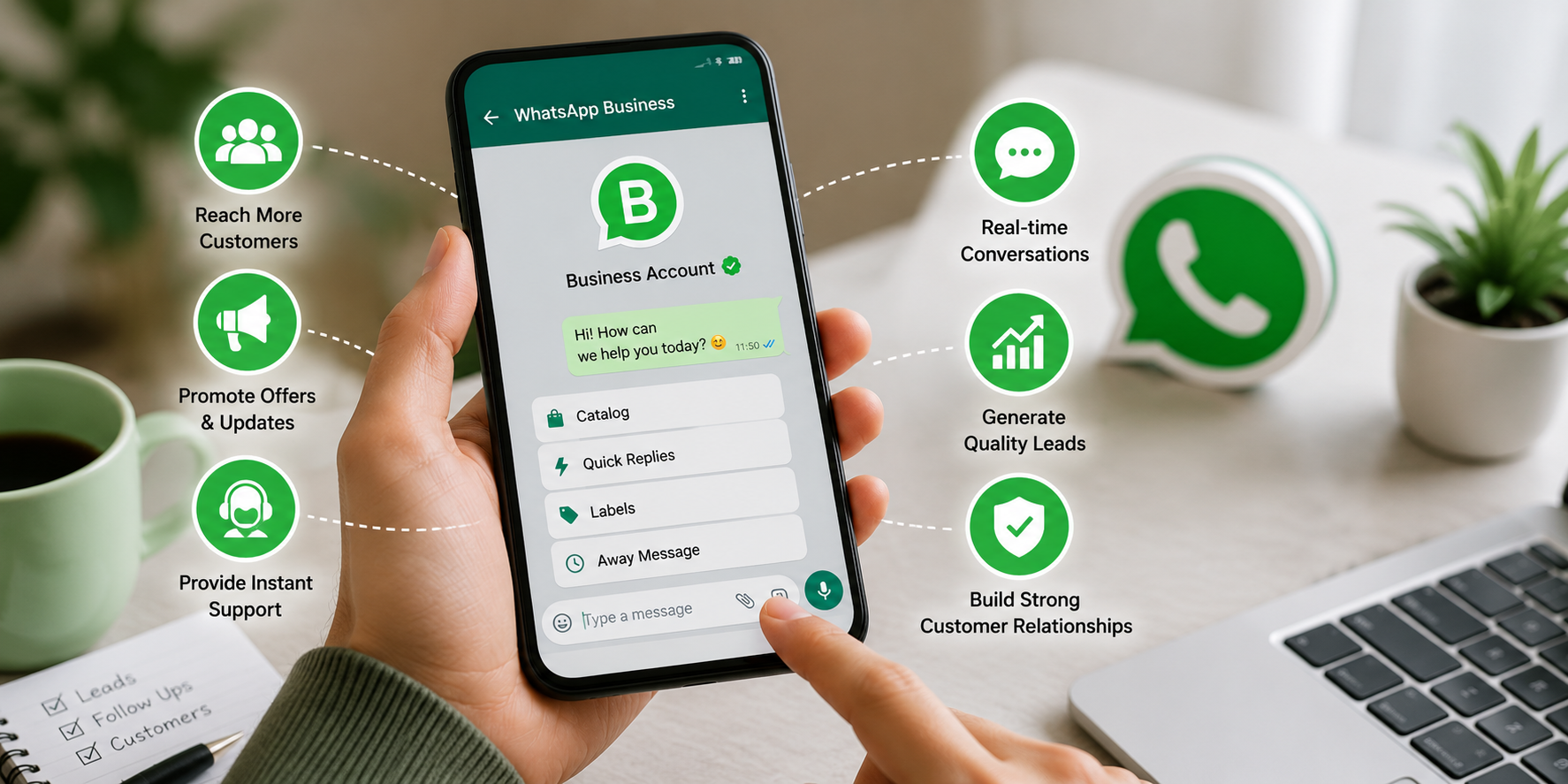
Businesses can use WhatsApp Business features to create a more professional communication experience.
Depending on the business setup and available features, businesses may use:
- Business profiles
- Product or service catalogs
- Quick replies
- Greeting messages
- Away messages
- Labels
- Customer conversations
- Business information
These features can help organize customer communication and make routine interactions easier.
WhatsApp Catalog for Products and Services
Businesses that sell products or offer packages can use catalog functionality where available to showcase their offerings.
A catalog can provide customers with information such as:
- Product images
- Product names
- Descriptions
- Pricing information
- Service details
This allows customers to explore offerings within the messaging experience instead of asking for every detail individually.
Automated WhatsApp Communication
For businesses handling a large number of customer enquiries, automation can help manage repetitive communication.
Automated systems can potentially assist with:
- Welcome messages
- Frequently asked questions
- Lead collection
- Appointment requests
- Order updates
- Customer routing
- Basic information
However, automation should be designed carefully. Customers should still have an easy way to reach a human representative when they need personalized assistance.
WhatsApp Marketing and Customer Follow-Ups
Follow-up is an important part of lead management.
Some potential customers may enquire but not immediately purchase a product or service.
A properly planned follow-up process can remind customers about:
- Service details
- Pending requirements
- Appointments
- Offers
- Product availability
- Next steps
Businesses should ensure that follow-up messages are appropriate, expected, and compliant with applicable messaging rules.
Personalized Customer Communication
One advantage of messaging is the ability to make communication more conversational.
Instead of sending the same generic message to everyone, businesses can organize conversations based on customer interests and requirements.
For example, a business could have different communication flows for:
- New enquiries
- Existing customers
- Product enquiries
- Service enquiries
- Event registrations
- Support requests
Relevant communication can create a better customer experience.
WhatsApp Marketing for Events
Businesses can also use WhatsApp to promote and manage events.
For example:
- Business workshops
- Product launches
- Seminars
- Webinars
- Store openings
- Promotional events
WhatsApp can be used to share invitations, reminders, event information, and follow-up communication with people who have opted in.
Using WhatsApp QR Codes
QR codes can make it easier for customers to start a WhatsApp conversation.
A business can place a WhatsApp QR code on:
- Posters
- Business cards
- Product packaging
- Store displays
- Websites
- Brochures
- Social media creatives
Customers can scan the code and begin a conversation directly.
WhatsApp Marketing and Customer Retention
Digital marketing should not focus only on acquiring new customers.
Existing customers can also be valuable for long-term business growth.
WhatsApp can help businesses maintain relationships by sharing relevant:
- Updates
- New products
- Offers
- Service information
- Helpful tips
- Customer support
Maintaining good communication can encourage customers to return and continue interacting with the brand.
Common WhatsApp Marketing Mistakes
Businesses should avoid treating WhatsApp like a platform for sending unlimited advertisements.
Sending Too Many Messages
Frequent unwanted messages can annoy customers and damage brand perception.
Sending Irrelevant Content
Messages should be useful and relevant to the audience.
Ignoring Customer Responses
WhatsApp marketing is based on communication. Businesses should respond to customer questions rather than treating the platform as a one-way advertising channel.
Poorly Written Messages
Messages should be clear, professional, and easy to understand.
Not Respecting Customer Consent
Businesses should follow applicable WhatsApp policies and obtain the appropriate user permission before sending marketing communications.
How to Create an Effective WhatsApp Marketing Strategy
A successful WhatsApp marketing strategy can follow a simple process.
Step 1: Define Your Goal
Decide whether the campaign is designed for:
- Lead generation
- Sales
- Customer support
- Promotions
- Awareness
- Retention
Step 2: Identify Your Audience
Understand who you want to reach and what information they need.
Step 3: Create Useful Content
Develop messages that provide genuine value rather than only promotional information.
Step 4: Create a Clear Call-to-Action
Tell customers what they should do next.
Step 5: Follow Up Professionally
Respond to enquiries and continue relevant conversations.
Step 6: Measure Results
Track enquiries, responses, conversions, and other meaningful campaign outcomes.
Measuring WhatsApp Marketing Performance
Businesses should measure the performance of their WhatsApp campaigns.
Useful metrics may include:
- Number of conversations
- Enquiries received
- Response rates
- Qualified leads
- Appointments
- Sales
- Customer retention
- Campaign conversions
These insights can help businesses understand which communication strategies are generating the best results.
WhatsApp Marketing as Part of Digital Marketing
WhatsApp marketing works best when it is integrated with other digital channels.
For example:
SEO helps customers discover your business.
Social media marketing builds awareness and engagement.
Google Business Profile improves local visibility.
Paid advertising reaches targeted audiences.
Content marketing provides useful information.
WhatsApp marketing creates a direct communication channel with interested customers.
Together, these channels can create a complete customer journey.
Choosing Professional WhatsApp Marketing Services
Managing WhatsApp campaigns professionally requires planning, content creation, audience segmentation, lead management, and performance tracking.
A professional digital marketing team can help businesses with:
- Campaign strategy
- WhatsApp content
- Lead generation campaigns
- Customer communication
- Promotional campaigns
- Automation planning
- Follow-up strategies
- Performance analysis
The strategy should always focus on customer value, appropriate consent, and compliance with applicable platform requirements.
Build Stronger Customer Connections Through WhatsApp
Digital marketing is not only about reaching more people. It is also about creating meaningful communication with the people who are interested in your business.
WhatsApp provides businesses with a convenient channel for connecting with customers, answering questions, sharing relevant information, and supporting the customer journey.